
Outstanding technology isn’t just about innovation—it’s about the people behind it. Behind every groundbreaking invention is a team of experts working tirelessly to push the boundaries of what’s possible. But what does it take to build and lead such a team? Strong leadership fosters a culture of excellence, empowering individuals to rise to their full potential. This is the foundation upon which Avalon Holographics was built.
Forged with Entrepreneurial Grit
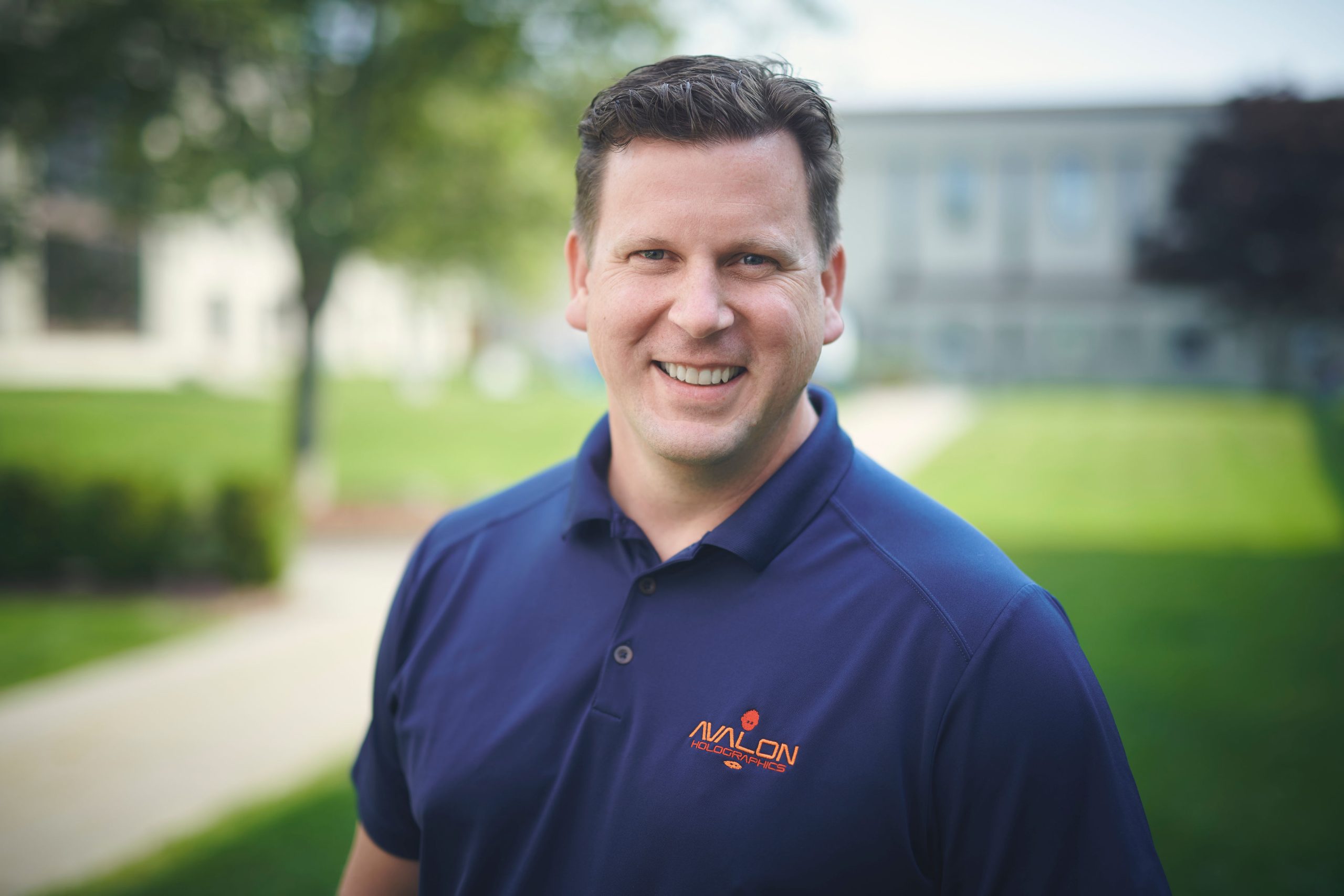
“As Avalon grew, I realized that not only was I responsible for my own family, but also for the livelihood of Avalon employees and, by extension, their families,” says Avalon Holographics CEO Wally Haas. It’s a perspective that speaks to the weight of leadership and the responsibility that comes with building a company from the ground up. But what led Haas to develop next-gen hologram technology, and why should you care about it?
Ask almost any entrepreneur, and they’ll tell you there was no straight path to success. As children, we’re asked what we want to be when we grow up—firefighter, doctor, or zookeeper are common responses. Rarely do you hear a child say they want to be an entrepreneur.
“Being an entrepreneur wasn’t something I was born to. It’s something I grew into and is now a core part of me,” says Haas. “I’m an electrical engineer by education, and I chose to go into one of the most difficult fields of an already difficult profession of semiconductors. To put it simply, I designed computer chips for a living.” Semiconductors are an industry with limited geographic hubs. Haas faced a choice: stay put or become a job creator. He chose the latter.
Having relocated to Newfoundland and Labrador, Haas started Avalon Microelectronics in 2004. “I read voraciously to learn the lessons from others because I needed the best chance of success,” says Haas. That drive turned into real results when Altera (later acquired by Intel) acquired the company in 2010. Four years later, Haas was searching for his next venture. Inspiration struck while watching Iron Man 2, when Tony Stark begins manipulating a floating 3D model of his father’s expo.
“I thought, ‘Wow, that looks amazing,’” says Haas. That spark led him to found Avalon Holographics, investing more than $6 million CAD of his own money into making real-life holograms possible. “I believed we were a sapling that would grow into the next great oak of Canadian technology companies,” reflected Haas.
The Mission of Avalon Holographics
Avalon’s first mission is clear: develop holographic technology that saves lives.
Achieving this means creating technology that the world has never seen before. This type of innovation requires years of research, tens of millions in investment, and a willingness to venture into the unknown, all from where few would expect deep-tech innovation to emerge.
Like most groundbreaking technologies, holography isn’t cheap to develop. The screen you’re reading this on was once a luxury, too. As costs drop and technology advances, true holography will become mainstream. “Holographic display technology is extremely cool. It’s integral to the stories of countless films, games, and TV shows,” says Haas. “But to be successful in this business, you have to really narrow down to what initially makes sense and later expand to adjacent markets.”
For Avalon, that meant focusing on industries where high-stakes decision making depends on advanced visualization, such as defense, healthcare, and industries utilizing complex digital twins. Mistakes can be costly in these fields, and traditional 2D screens, or even VR, have limitations.
The Limitless Potential for Holographic Technology
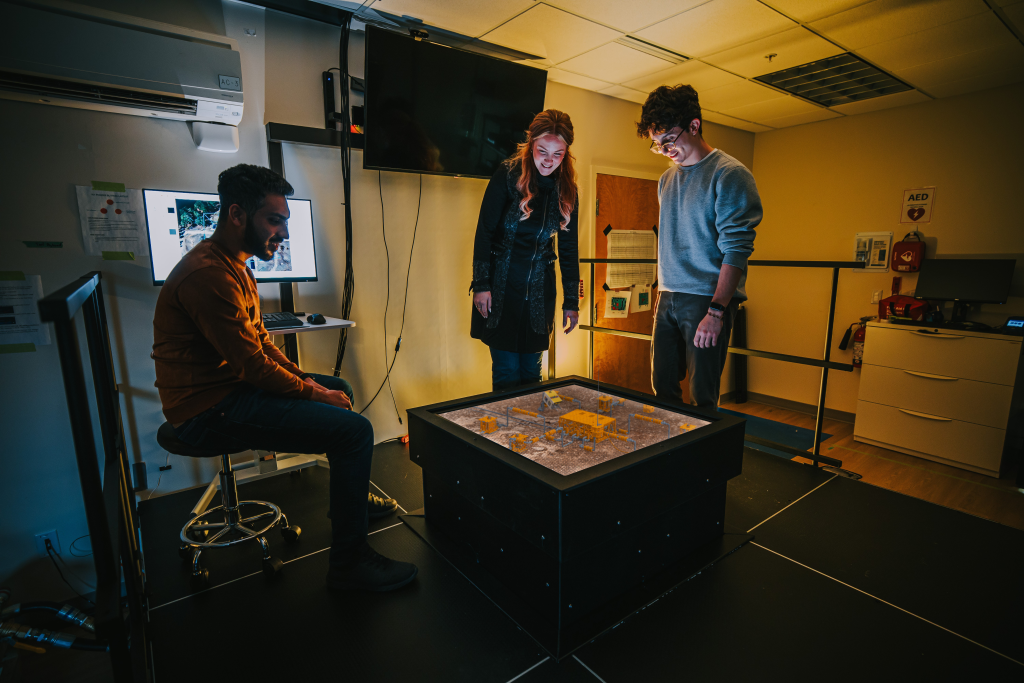
From mapping out the spread of wildfires to reviewing anatomy before critical surgery, holographic displays offer professionals unprecedented clarity. When lives are on the line, miscommunication can be catastrophic. That’s why the defense industry was among the first to recognize the potential of Avalon’s flagship product, NOVAC.
“The NOVAC display lets teams gather around it and discuss mission-critical details without anything coming between them and what they’re reviewing,” Haas explains. One active-duty operator put it starkly: “We lost people in an operation, and during the after-action review, we realized we missed key sightline info during mission planning. I think this technology could have made the difference in saving them.”
The medical field presents similar challenges. A team of surgeons must be wholly aligned before a procedure begins. With NOVAC, they can study high-fidelity 3D models of the human body rather than relying on flat images or outdated anatomy charts. Unlike VR or AR solutions, which require physical handling, NOVAC eliminates the need to “re-scrub” after removing a headset, making it a practical tool in sterile environments.
What truly sets Avalon apart is its approach to holography. Most so-called “holographic” displays today rely on optical tricks, such as lenticular lenses or light-field technology, to create the illusion of depth. Many require high-resolution 4K or 8K displays to enhance the effect. But true holography—where light is manipulated to create floating 3D images visible from all angles—remains an elusive goal.
Avalon has taken that research and turned it into a tangible product. With over 60 patents granted and more filed, the company is at the forefront of the field. As one U.S. Army representative put it, “I feel like I’m looking at the very first steps of a technology that will one day be as commonplace as LCD monitors or seatbelts.”
A Vision for the Future
Wally Haas shares that vision. “I imagine a day where you have a holographic wall in your house, and when you want to have a conversation in your living room with family who might be 3,000 miles away, you just turn on your wall, and there’s your mom sitting on her couch,” he says. A truly immersive, social experience without the barriers of distance.
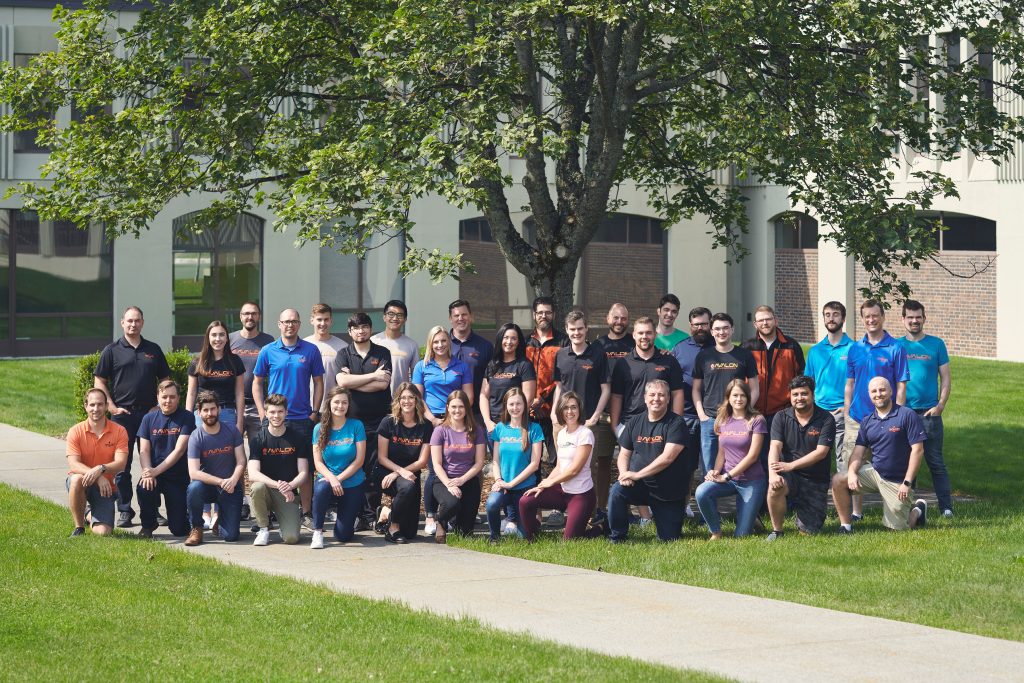
But getting there requires more than just technological breakthroughs—it requires the right culture. Haas built Avalon Holographics with an understanding of behavioral, industrial, and organizational psychology to foster a high-performance workplace.
“I aim to create an environment where individuals have as much autonomy and responsibility as possible—because that’s when people do their best work,” says Haas. “It’s that kind of culture that’s allowed us to succeed where hundreds of millions of dollars have failed elsewhere. Building a true holographic display requires a holistic approach—everything has to work together, or it doesn’t work at all.”
The tech industry often focuses on products over people, but Avalon Holographics is proving that great leadership and workplace culture can create technical marvels. By empowering brilliant minds, the company is making the future of holography a reality. And in doing so, they’re not just revolutionizing display technology—they’re changing how we see and interact with the world itself.
