
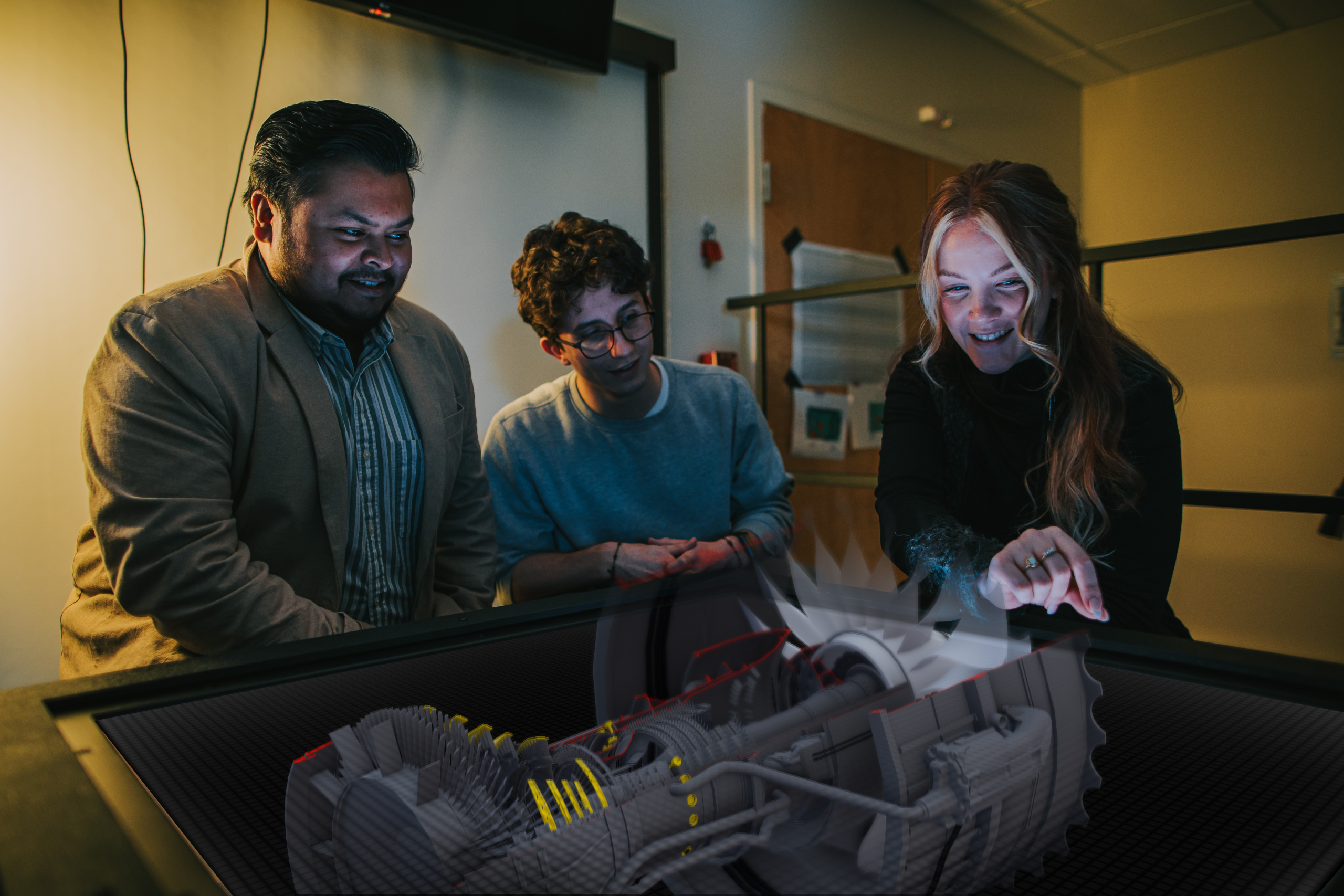
What do Jaguar’s racecars and the city of Madrid have in common? They both have digital twins: identical digital replicas of themselves that can be explored within a virtual world. Digital twins have been around for years, and most industries rely on them to keep track of everything, from manufacturing new products to planning disaster responses or even executing space missions.
In these high-stakes situations, it can be revolutionary to have an identical 3D representation of your system, with which you can run simulations, gather data, and see live updates. In fact, it’s a technology many have been hoping for since David Gelernter wrote of a virtual world used for simulation and analysis in his 1991 novel, Mirror Worlds. Efforts to make it a reality have resulted in digital twins as we know them.
But the 2D screen has always limited their potential. Luckily, capabilities have caught up with our imaginations, and it’s now possible to have a realistic 3D twin of your object or environment in hologram form.
What do we mean by digital twin holograms? How do they work? Are we going to see control room walls covered in holographic panels? We’ll answer all that and more in this blog, but first, let’s establish the basics of digital twins.
A digital twin is a digital replica of an object, landscape, or system. This could be a piece of footwear, a forest, or an entire factory. There are even digital twins of towns and cities. Digital twins are designed to be exact replicas with all the features, characteristics, and components of their real-life counterparts. The digital twin exists for the duration of its counterpart’s lifecycle and is generally used to monitor its condition, make improvements, or gather data.
Digital twins have gotten pretty advanced. Recently, Stanford Medicine and its collaborators used AI-powered twins of mouse brains to study the intricacies of neural connectivity. Elsewhere, a huge replica of the Yangtze River basin will use advanced simulations to provide real-time data on floods, water engineering, shipping, and more — solving a host of challenges faced by the region.
There is a variety of digital twin software on the market, much of which enables live data and remote collaboration so that teams can monitor real-world systems without leaving their desks. That’s why the technology has seen widespread adoption in manufacturing, energy, automotive, and many other industries.

Digital twins have numerous uses across plenty of industries. Some of the main ones are:
Of course, these are just three fundamental applications of digital twins. The potential uses are vast. Consider any situation where you could benefit from an accurate virtual recreation of something, and there’s a good chance digital twins could be the solution.
However advanced they become, digital twins have always had one drawback: the limitations of a 2D display. The human brain needs cues like shading and perspective to understand depth, shape, and other complex information. That means that anything we see on a flat screen limits our understanding. We might not even realize which important characteristics we’re missing.
That’s not the end of the world if you’re designing a new shoe, but it could be a serious issue when lives depend on your decision-making. If you’re relying on digital twins to simulate a disaster response, plan a search-and-rescue mission, or ensure critical infrastructure is being properly maintained, every detail counts.
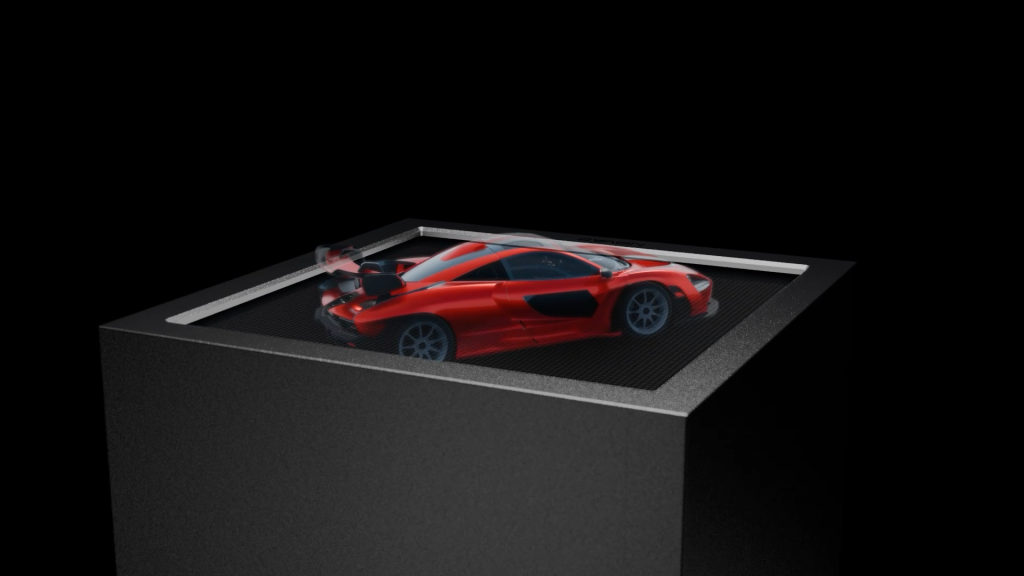
Thankfully, this age-old problem now has a solution: holograms. Created using light rays, holograms are natural 3D images on which we can see depth and detail from any angle, all without additional hardware like glasses or headsets.
Holograms are an optimal way to experience digital twins because they replicate how we naturally see objects. Light created by a holographic display bounces from the hologram into our eyes just as it would if we were looking at a real-life subject. It’s a level of detail that virtual or augmented reality can’t achieve, and there are no headaches or unpleasant effects, either.
Anyone launching a satellite, planning search and rescue, or preparing for complex surgery has enough to worry about without the risk of eye strain. With a hologram, they can focus on processing and retaining all the necessary information for a sound decision.
The unparalleled physical accuracy of a hologram makes digital twins an even more reliable solution for high-stakes environments. Anyone planning defense operations can now see detailed characteristics of the landscape. They can look at it from multiple angles, run instant simulations, and make critical decisions in the heat of the moment.
Trainee surgeons can gather around a hologram of the human anatomy to get a clearer picture of the challenges ahead. They can understand the spatial limitations of operating on particular body parts and spot things they simply couldn’t with a diagram or flat virtual object. Simulations can even help them prepare for specific risks involved.
Holographic digital twins can be powered by platforms like NVIDIA Omniverse and Bentley Systems’ suite of software, retaining the high-quality visuals. Then, they can be manipulated with familiar devices like keyboards or game controllers. Voice commands will be an option in the years to come, too. Integration with AI-driven platforms will boost the power of these digital twins while opening up new possibilities for interactivity and team collaboration.
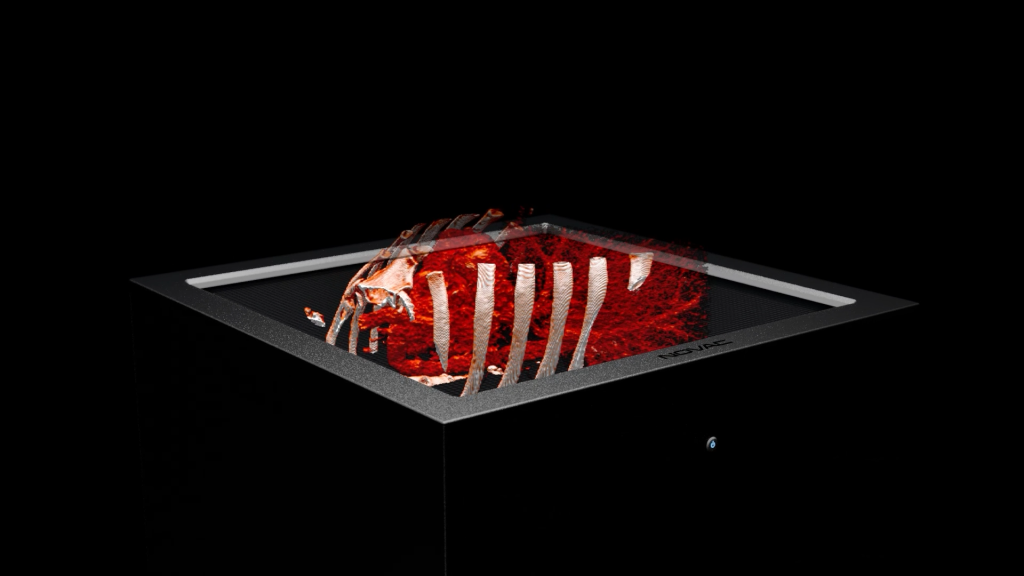
Right now, the vast computing power needed to visualize a hologram is condensed into our holographic table display. It’s a first-of-its-kind product on the market. We call it NOVAC. In the not-too-distant future, we’ll see it further condensed into tiled flat panels that make holograms even more versatile. A control center could feature a digital twin rendered volumetrically within an entire wall display or emerging dynamically from a colossal table.
Eventually, mobiles, tablets, and smaller displays will enable holograms, too. You’ll be able to check on the status of a digital twin from anywhere or run a quick simulation the minute you think of something. Holograms will be a part of everyday life, and digital twins will be solving problems all over the world.
Digital twins are just one of the areas enhanced by Avalon Holographics and NOVAC. Find out more.
